In the modern manufacturing landscape, the ability to merge disparate materials into a single, cohesive unit has become a hallmark of sophisticated product design. This process, known as overmolding, has moved far beyond niche industrial use to become a standard in sectors ranging from consumer electronics to life-saving medical devices. By combining the structural integrity of rigid plastics with the tactile comfort of elastomers, over-molding allows engineers to achieve a level of functionality and aesthetic appeal that was previously impossible.
What is Overmolding?
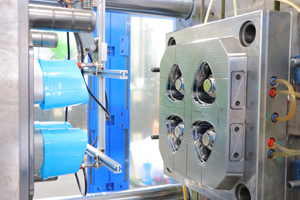
Overmolding is an injection molding process where one material (the overmold) is molded directly over a second material (the substrate). Typically, the substrate is a rigid plastic or metal part that provides the skeleton of the component, while the overmold is a softer, flexible resin, such as Thermoplastic Elastomer (TPE) or Thermoplastic Polyurethane (TPU).
The bonding between these materials is the most critical aspect of the process. This bond can be achieved chemically, where the materials fuse at a molecular level, or mechanically, where the overmold locks onto the substrate through undercuts or holes. For high-performance applications, a combination of both is often used to ensure the materials never separate under stress.
Material Compatibility
The success of any overmolding project begins with material science. Not all plastics and elastomers play well together. Choosing materials with compatible melting points and chemical structures is essential. If the materials are incompatible, they will simply peel apart, leading to part failure.
Commonly used substrate materials include ABS, PC and Nylon. These are often paired with overmolds like TPE or Silicone. For instance, an ABS substrate provides excellent impact resistance, while a TPE overmold adds a soft-touch grip and vibration-dampening properties. Understanding these compatibility charts is a core expertise at Keyplast, where material selection is optimized to meet the specific environmental and mechanical demands of the final product.
Key Applications across Industries
The versatility of over moulding has led to its adoption across several major industries, each utilizing the process to solve unique challenges.
1. Consumer Electronics and Handheld Devices
In the world of consumer goods, aesthetics and ergonomics are primary drivers. Overmolding is the secret behind the premium feel of modern smartphones, remote controls, and gaming controllers. By adding a soft-touch layer over a rigid frame, manufacturers can improve the user's grip, provide shock absorption, and differentiate their brand through multi-color and multi-texture designs.
2. Medical and Healthcare Products
In medical settings, overmolding serves a dual purpose: safety and hygiene. Surgical instruments often feature overmolded handles to provide surgeons with a non-slip grip, even when wearing gloves or in fluid-heavy environments. Furthermore, overmolding can be used for encapsulation, sealing sensitive electronic sensors inside a water-tight plastic shell that can withstand the rigorous sterilization and autoclaving processes required in hospitals.
3. Automotive Components
The automotive industry uses overmolding to enhance both the cabin experience and the vehicle's structural integrity. Internally, it is used for soft-touch dashboards, steering wheels, and gear shifters. Under the hood, overmolding is used to create gaskets and seals that are permanently bonded to plastic housings, preventing leaks and reducing the noise, vibration, and harshness (NVH) that can travel through the vehicle.
4. Professional Power Tools and Hardware
Tools like drills, saws, and screwdrivers are subject to intense physical abuse and high-frequency vibration. Overmolding a rubberized grip onto a nylon handle not only reduces the risk of long-term vibration-related injuries but also adds a layer of electrical insulation, protecting the user from potential shocks.
Why Manufacturers Choose Overmolding?
Elimination of Secondary Assembly: Traditionally, a rubber grip would be glued or screwed onto a plastic handle. Overmolding creates the integrated part in a single process, eliminating the labor costs associated with assembly and reducing the risk of human error.
Enhanced Durability: Because the materials are bonded during the molding phase, there are no seams or gaps where moisture, bacteria, or chemicals can enter. This makes the part much more durable than a multi-piece assembly.
Design Freedom: Overmolding allows for complex shapes and thin-walled soft sections that would be impossible to achieve through traditional assembly. This opens up new possibilities for ergonomic and industrial design.
Technical Considerations
While the benefits are clear, over-molding requires precise engineering. Mold temperatures must be carefully controlled; if the substrate is too cold, the overmold won't bond; if it's too hot, the substrate may deform. Additionally, draft angles must be slightly different for overmolded sections to ensure the soft material doesn't tear when being ejected from the mold.
Overmolding has transformed from a luxury feature into a manufacturing necessity. By bridging the gap between rigid strength and flexible comfort, it allows for the creation of products that are safer, more durable, and more enjoyable to use. Whether it is a protective phone case or a critical medical sensor, the over moulding applications are only limited by an engineer's imagination.
For companies looking to innovate, partnering with a specialist like Keyplast ensures that the complexities of material compatibility and mold design are handled with expertise. As consumer expectations for quality and ergonomics continue to rise, overmolding will remain at the forefront of the plastic injection molding industry.