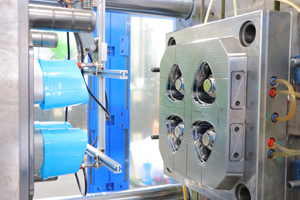
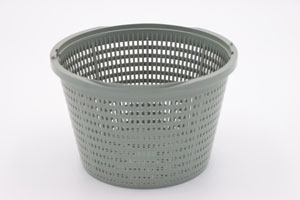
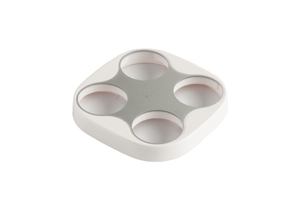
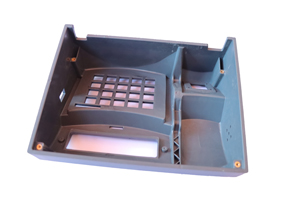
In the competitive world of plastic manufacturing, time is quite literally money. Whether producing intricate electronic components or high-volume consumer goods, the speed at which a part moves from a raw resin state to a finished product determines the project's overall profitability. This specific duration, known as the injection molding cycle time, is the heartbeat of the manufacturing process.
Understanding and optimizing this cycle is crucial for manufacturers, where balancing high-speed production with uncompromising part quality is a daily priority. By analyzing each stage of the cycle, engineers can identify bottlenecks, reduce waste, and improve the bottom line.
What is Cycle Time in Injection Moulding?
Cycle time is defined as the total time required to complete one full molding process, measured from the moment the mold closes to the moment it closes again for the next shot. A standard cycle is comprised of several distinct stages:
Mold Closing Time: The time taken for the clamping unit to seal the mold halves together.
Injection (Fill) Time: The duration required to push the molten plastic into the mold cavity.
Packing and Holding Time: The period where pressure is maintained to ensure the cavity is completely filled and to compensate for material shrinkage.
Cooling Time: The phase where the plastic solidifies enough to be ejected without deforming.
Mold Opening and Ejection: The time spent opening the mold and physically removing the part.
Reset/Dead Time: The seconds spent between ejection and the start of the next cycle, like cleaning the mold or placing inserts.
The Mathematical Breakdown
To achieve precision in high-volume production, engineers often use specific formulas to calculate and predict cycle times. The basic formula is:
Total Cycle Time = T_fill+T_pack+T_cooling+T_mold_move
Among these variables, Cooling Time (T_cooling) is almost always the most significant factor, often accounting for 70% to 80% of the total cycle duration. Reducing cooling time by even a few seconds can result in thousands of extra parts produced over a month of operation.
Factors Influencing Cycle Efficiency
Several variables dictate how fast a cycle can run. Professional injection moulding products manufacturers focus on these three primary pillars to ensure peak performance:
1. Part Design and Wall Thickness
The thickness of the part is the single greatest predictor of cycle time. Cooling time increases proportionally to the square of the part’s wall thickness. If a wall is twice as thick, it will take four times as long to cool. This is why experienced designers advocate for uniform, thin-walled designs whenever possible.
2. Cooling System Design
Effective thermal management is essential. Modern molds utilize conformal cooling, channels that follow the geometry of the part, to ensure heat is extracted evenly and rapidly. If the mold temperature is not controlled precisely, the part may warp, or the cycle will need to be slowed down significantly to prevent defects.
3. Material Properties
Different resins have different thermal conductivities and melting points. For example, a semi-crystalline plastic like Polypropylene (PP) might have a different cooling requirement than an amorphous plastic like ABS. The material’s Melt Flow Index (MFI) also determines how quickly the mold can be filled during the injection phase.
Strategies for Optimization
To stay ahead in a global market, manufacturers must constantly look for ways to trim seconds off the clock. Optimization often involves a multi-pronged approach:
Utilizing High-Performance Machinery: Modern injection molding machines feature faster dry cycle times (the speed at which the mold opens and closes) and more responsive hydraulic or electric systems.
Scientific Injection Molding (SIM): By using sensors within the mold, engineers can monitor the actual pressure and temperature of the plastic, allowing them to stop the holding phase the exact millisecond the gate freezes, rather than relying on a conservative estimate.
Multi-Cavity Molds: While this doesn’t technically reduce the cycle time of a single shot, it increases the number of parts produced per cycle, effectively lowering the time per part.
Automated Ejection: Using robotic arms to remove parts instead of manual labor ensures the reset time is consistent and lightning-fast.
The Quality-Speed Trade-off
While the goal is to reduce injection molding cycle time, it must never come at the expense of part integrity. If the cycle is too fast, the part may be ejected while the core is still molten, leading to sink marks or significant dimensional warping. If the injection speed is too high to save time, it can cause burn marks or jetting.
This delicate balance is why choosing a sophisticated manufacturing partner like Keyplast is so important. Expert manufacturers use advanced simulation software, like Moldflow, to predict the optimal cycle time before a single piece of steel is cut for the mold.
Injection molding cycle time is the ultimate metric of production efficiency. By focusing on smart part design, advanced cooling techniques, and high-performance machinery, manufacturers can achieve a lean process that maximizes output.
As we have seen, the cooling phase is where the most significant gains are made, but every second saved in filling, packing, or mold movement contributes to a more competitive manufacturing operation. In the world of Keyplast and other industry leaders, the pursuit of the perfect cycle is a continuous journey toward engineering excellence and economic efficiency.